If you are searching for assisted living or memory care in Texas, you have probably spent a few late nights scrolling through Google reviews, senior care directories, and social media. The comments can be all over the place. One family gives five stars and calls it a blessing. Another gives one star and says never come here.
As a middle‑aged Texan who has walked alongside many families making this exact decision, I can tell you this. Reviews are helpful, but they are only one piece of the puzzle. When it comes to choosing a home for your mom or dad, you need more than star ratings. You need context, good questions, and your own eyes and ears.
This article will walk you through how to evaluate assisted living and memory care reviews in a practical, Texas‑sized way so you can make a choice you feel confident about.
Step 1: Look at patterns, not just star ratings
A single one‑star or five‑star review rarely tells the whole story. What matters more is the pattern.
What to look for
- Consistent complaints If several reviews mention the same problem, like poor communication, frequent staff turnover, or issues with cleanliness, that is worth paying attention to.
- Consistent praise If many families mention the same strengths, such as loving caregivers, good food, or engaging activities, that likely reflects the culture of the home.
- Timeline of reviews Are most negative reviews several years old, with more recent positive ones. That may mean leadership changed and things improved.
Questions to ask the home
- “We noticed several reviews mentioned communication issues last year. What changes have you made since then.”
- “Families often praise your staff for being caring. How do you train and support your caregivers to maintain that level of care.”
Mercy House, for example, is proud that many reviews mention our warm atmosphere and staff who know each resident by name. That is not an accident. It comes from our commitment to smaller homes and a low staff‑to‑resident ratio across our six Mercy House homes in Texas.
Step 2: Read past emotional language
Senior care reviews are often written in times of stress. Someone may write a review right after a fall, a hospital visit, or a misunderstanding. Emotions can run high, and the wording may be strong.
How to read between the lines
- Identify the actual issue Is the complaint about a true safety concern, or about a communication style that felt abrupt.
- Check for details Honest criticism usually includes dates, specifics, and facts. Vague anger without details is harder to weigh.
- Look for both sides Sometimes reviewers mention that the home attempted to fix the problem. That shows a willingness to respond and improve.
Questions to ask the home
- “I read a review about a fall that happened here. Can you walk me through how your team responds when a resident falls and how you keep families informed.”
- “One review mentioned staff being short‑handed during a weekend. What is your weekend staffing plan, especially in your memory care homes.”
When you ask calmly and directly, you learn far more than any online comment can tell you.
Step 3: Separate building complaints from care complaints
Not all problems are equal. Peeling paint and a worn sofa are very different from poor medication management. Both matter, but in different ways.
Types of concerns in reviews
- Care and safety medication errors, frequent unexplained falls, neglect, or residents being left alone.
- Communication difficulty reaching staff, slow response to questions, confusion about billing.
- Environment décor, room size, older furniture, or minor maintenance items.
- Lifestyle food quality, activities, social life, religious or spiritual support.
Care and safety come first, always. Communication is a close second. Environment and lifestyle still matter, but they should not overshadow whether your loved one is truly safe and cared for.
Questions to ask the home
- “How do you manage medications for residents with memory issues.”
- “What is your plan for preventing falls and injuries.”
- “If I call or text with a concern, who gets back to me and how quickly.”
At Mercy House, our small home settings allow caregivers to notice changes quickly. In a home with fewer residents, it is much easier to see when someone is not eating well, seems unsteady, or is acting differently than usual.
Step 4: Pay close attention to staffing comments
For memory care especially, staff make or break the experience. A beautiful building without kind, consistent caregivers will not feel like home.
Staffing clues in reviews
- Positive signs Families mention staff by name. Residents are called by name. Reviews describe caregivers as patient, gentle, or like family.
- Warning signs Constant mention of “new faces,” “different people every time,” or “no one knows my mom’s routine.”
Questions to ask about staffing
- “What is your staff‑to‑resident ratio in your memory care homes, both days and nights.”
- “How long has your core staff been here.”
- “How do you train staff to handle dementia behaviors with dignity.”
Mercy House operates six small memory care and assisted living homes in Texas, rather than one big complex. Our goal is a low staff‑to‑resident ratio so our caregivers can truly know each resident, not just care for a list of tasks.
Step 5: Watch for how the home responds to reviews
Many families overlook this step, but it is revealing. A thoughtful response from the home to a review can tell you a lot about their values.
Good signs in responses
- The home thanks the reviewer, even when the feedback is negative.
- They address specific concerns and invite the family to talk privately.
- They mention improvements they have made when appropriate.
Concerning signs
- Defensive or dismissive responses.
- Blaming the resident or family.
- No response at all to serious complaints.
Questions to ask the home
- “I saw your response to a review about night staff. Have you changed your nighttime procedures since then.”
- “How do you usually handle complaints from families.”
You want a home that takes concerns seriously, not one that tries to explain them away.
Step 6 Compare reviews from different sources
Do not rely on a single website. Look at several places and see if the story is consistent.
Where to look
- Google reviews
- Senior care listing sites
- Facebook or other social media pages
- Local community groups or church contacts
If reviews are excellent on one site but poor on every other, something is off. Consistent comments across platforms usually give you a clearer picture.
Questions to ask the home
- “How do you collect feedback from families outside of online reviews.”
- “Do you do satisfaction surveys. Can you share what you have learned from them.”
Step 7: Read especially for memory care experiences
If your loved one has dementia or Alzheimer’s, general assisted living reviews are not enough. You need to know how the home handles memory care specifically.
What to look for in reviews
- Stories about residents with wandering or confusion being safely redirected.
- Comments about how staff handle agitation or anxiety with kindness.
- Mentions of structured activities that match what residents can still enjoy.
Questions to ask the home
- “Can you give examples of activities you offer just for residents with memory loss.”
- “How do you keep your memory care homes secure while still feeling like a real home.”
- “How do you help residents who are scared, confused, or up at night.”
Mercy House’s six homes in Texas are designed with memory care in mind. They are secure, but they look and feel like houses, not institutions. Residents can enjoy familiar routines, shared meals, and small group activities that fit their abilities.
Step 8: Use reviews to build your tour checklist
Once you have read through reviews, turn what you saw into a list of things to look for when you visit.
On your tour, pay attention to
- Smells and cleanliness A home can be older and still be clean and fresh.
- Noise level and mood Do residents seem calm and engaged, or bored and ignored.
- How staff speak to residents Are they kind, patient, and respectful.
- Whether staff seem rushed Even the nicest people struggle to provide good care if they are constantly short on time.
Questions to ask during the visit
- “Can I meet the person who would be in charge of my mom’s daily care.”
- “How do you keep families updated about changes in health or behavior.”
- “If my loved one needs more help later, can you provide that here.”
At Mercy House, we encourage families to visit more than once, at different times of day, to see real daily life in our homes. Morning can look very different from evening, especially for residents with memory loss.
Step 9: Talk to families, not just read their words
Online reviews are helpful, but nothing replaces an honest conversation with another family who has walked this road.
How to connect with other families
- Ask the home if some current families are willing to speak with you.
- Talk with people at church or in local community groups who have loved ones in care.
- Ask your loved one’s doctor if they know families who have used particular homes.
Good questions to ask another family
- “How quickly does the home let you know if something changes with your loved one.”
- “What do you wish you had asked before moving your parent here.”
- “Would you choose this same home again.”
Families of Mercy House residents often tell us that what matters most is peace of mind. Knowing that mom or dad is safe, known, and loved helps them rest at night.
Step 10: Trust reviews, but trust your gut more
Reviews are a helpful tool, but they are not the final word. At some point, you will walk into a home and either feel at peace or feel uneasy.
When you visit, ask yourself
- “Can I picture my mom sitting in this living room, chatting with others, maybe humming along to a hymn or an old song.”
- “Do I feel heard when I ask questions.”
- “Does this feel like a place where people live, or a place where people are stored.”
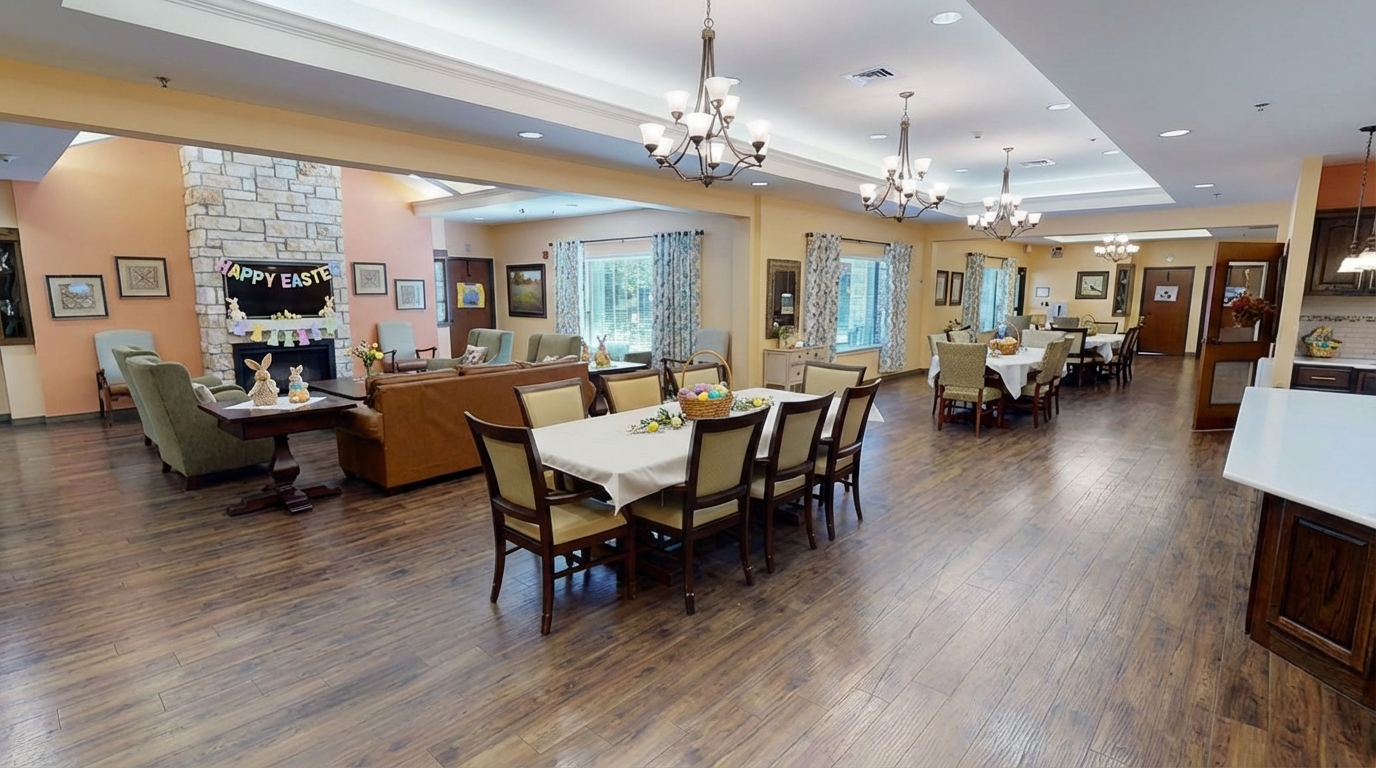
Mercy House intentionally keeps our homes small, warm, and personal. With six homes across Texas, each one is designed to feel like a neighborhood house, not a big institution. Residents sit around real tables, not cafeteria lines. They are called residents, not patients, because this is their home.
How Mercy House fits into what you have learned
When you apply all these steps, here is how Mercy House stands apart for Texas families seeking assisted living or memory care.
- Six small homes, not one large facility Each Mercy House home is designed to feel like a real house. This helps residents with memory loss feel safer and less overwhelmed.
- Low staff‑to‑resident ratio Our caregivers have time to actually know each resident, their routines, and their stories.
- Focus on memory care Many of our residents live with dementia. Our homes and training are built around their unique needs.
- Community and connection Residents can participate in activities, make friends, and enjoy a daily rhythm instead of feeling isolated in a room.
- Family partnership We encourage families to stay involved, visit often, and share what makes their loved one special.
When you read Mercy House reviews, you will notice families often talk about how their mom or dad is loved, not just looked after. That is exactly what we want. A real home where residents are safe, seen, and cherished.
Final thoughts
If you are reading reviews late into the night, trying to make the right decision, you are not alone. Many of us have faced this crossroads with our own parents and grandparents. Use reviews as a starting point, not the finish line. Look for patterns, ask good questions, visit in person, and talk with other families. Most of all, pay attention to your own sense of peace.
If you would like to see what small, home‑style memory care looks like in person, we invite you to visit one of the many Mercy House homes
here in Texas. Walk through the front door, listen to the conversations, and see how it feels. Your loved one deserves more than a bed in a large facility. She deserves a home.